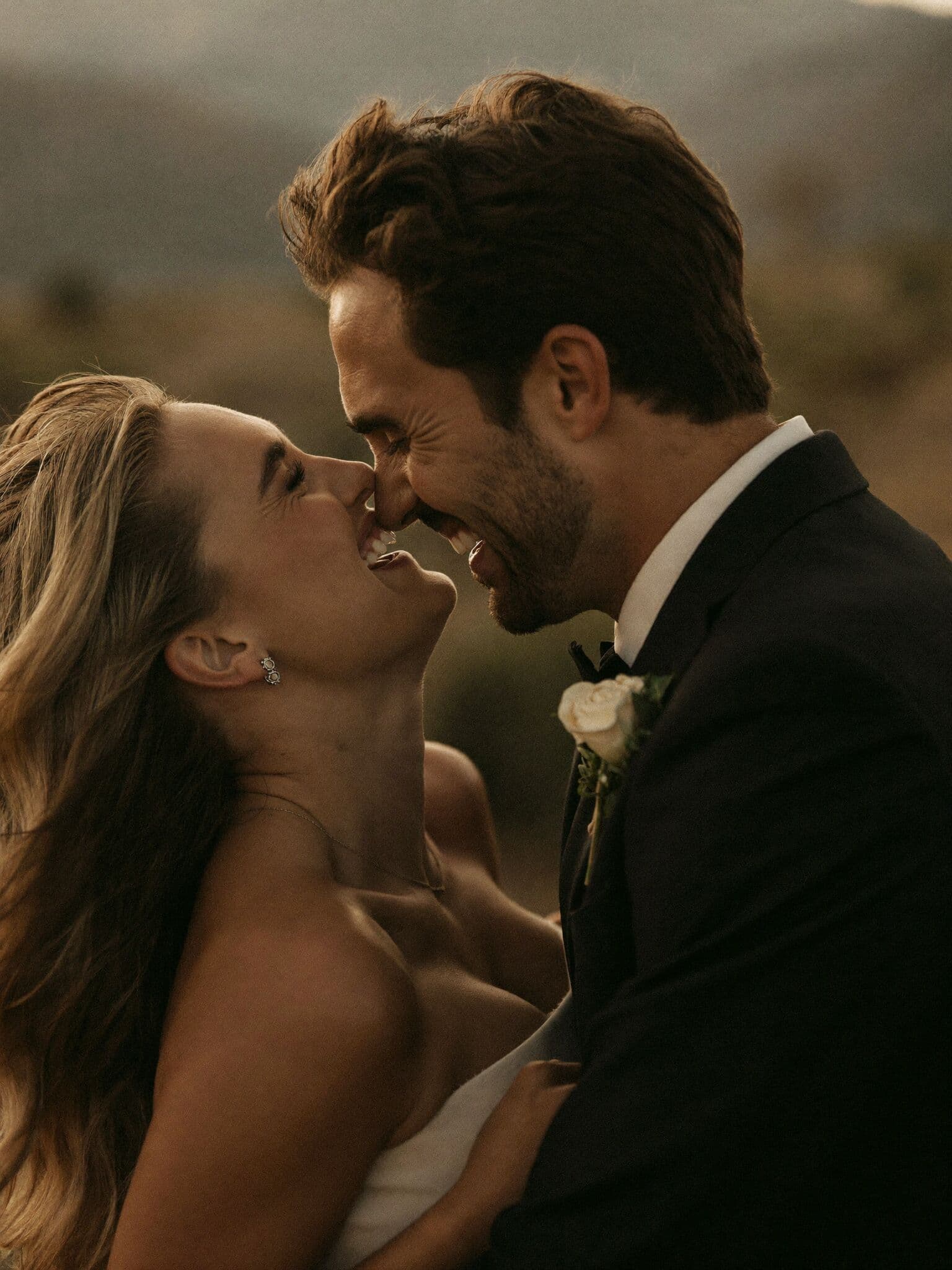
How to Tell Your Family You're Eloping (Scripts Included)
PUBLISHED JULY 8, 2026 · UPDATED AUGUST 20, 2026
The short answer
Tell your family before you elope if you want their blessing and can weather their input, or after if you expect pressure that would reshape your plans. Lead with certainty, not apology: share the decision as made, explain what the day means to you, and offer a concrete way to include them, like a livestream, letters read at the ceremony, or a family dinner afterward.
First, drop the guilt for a minute
Couples sit on our sofa and say the same sentence: "We know it is selfish, but..." It is not selfish. A marriage belongs to the two people in it. Choosing to say your vows without an audience is a preference, not a betrayal, and the couples who elope are usually the ones taking their vows most seriously, not least.
What families usually grieve is not your wedding. It is a moment they imagined for themselves: a daughter in a dress at the top of an aisle, a son's toast. That grief is real and worth handling gently. But you can honor a feeling without obeying it, and most families come around faster than couples fear. In ten years of this work, we have watched far more parents cry at a livestream than hold a lasting grudge.
Before or after: the real decision
Telling them before works when your family is loving but opinion-rich. It gives people months to adjust, lets you plan inclusion (letters, calls, a livestream), and means the day itself carries no secret. The cost: you will field input, and you need the spine to receive it without renegotiating your plans.
Telling them after fits when you expect pressure that would genuinely reshape or poison the plans: a parent who will campaign, a family conflict where any guest list is a minefield, or cultures where the wedding is treated as a family asset. You protect the day and present the marriage as a settled fact. The cost: some people will feel excluded from even knowing, and that sting is real.
A useful test: if your family found out you had told your sibling first, would the fallout be about the elopement or about the secrecy? If secrecy itself is the wound, tell them before. Most of our couples do, roughly four to six months out, once the date and destination are booked and non-negotiable.
Scripts that actually work
Say it in person or on a call, never by text. Lead with the decision, not a question. Here are openings our couples have used, lightly anonymized:
- The direct one: "We have some happy news. We've decided to get married, just the two of us, in Iceland in September. It's booked, and we are so excited. We wanted you to be one of the first to know."
- The reassurance-first one: "Mom, we're getting married, and before you ask: yes you'll see photos of everything, yes there's a plan for celebrating with you, and no, nobody else is invited either. It's just us on a mountain, because that's who we are."
- The one for hurt feelings: "This isn't about not wanting you there. If we invited anyone, it would be you. We realized we can't say those vows in front of an audience, any audience, and still mean them the way we want to."
- The after-the-fact one: "We have news that might land strangely for a second: we got married last week in Patagonia. We kept it completely private because we knew a guest list would turn into a negotiation, and we didn't want our marriage to start that way. We'd love to celebrate with you properly, and we're planning a dinner for exactly that."
- The boundary-setter, for when the campaign starts: "I hear that you're disappointed, and I understand why. The plan isn't changing. What I'd love to talk about is how we celebrate with you after."
Ways to include family without inviting them
Inclusion is not binary. Some of the most emotional moments we photograph involve people who are thousands of miles away:
- Letters: ask parents and siblings to write sealed letters, and read them aloud to each other at the ceremony spot. We photograph this every time, and it wrecks everyone, in the best way.
- A livestream: one phone, a small tripod and Starlink or local signal covers most locations. Grandparents in three time zones have watched our couples marry on a glacier.
- Video calls at golden hour: five minutes of champagne-waving after the vows, when emotions are still spilling over.
- Something borrowed, literally: carry your father's watch, wear your grandmother's earrings, wrap the bouquet in a piece of your mother's wedding dress.
- A family-only dinner later: a date on the calendar changes everything. "You're not invited" lands differently as "your night is October 12th."
- A first-look with the gallery: some couples host a small evening where the photos and film are shown for the first time. It gives family a moment of their own.
Handling the hard reactions
Disappointment is not a verdict on your decision; it is the sound of someone updating an expectation. Let people be sad without treating their sadness as an instruction. Most parents move from hurt to curiosity to excitement in weeks, especially once they see a plan for their own celebration.
Guilt-tripping deserves a calm broken-record response: acknowledge the feeling, restate the plan, redirect to the after-party. You never need to defend the decision twice in one conversation. If a family member escalates to threats or ultimatums, that tells you about the dynamic you were right to sidestep, and the answer still is not a bigger guest list.
And a note for the two of you: agree on your script together before any calls, and never let one partner absorb all the family pressure alone. You are a team before you are anyone's child. Presenting a united, warm, unmovable front is most of the battle.
If you want a few people there after all
Telling your family sometimes surfaces a surprise: you realize you do want your mother there, or your two best friends. That is allowed. An elopement holds up to about ten people before it stops behaving like an elopement, and we regularly build days where a tiny group joins the ceremony and then leaves the couple to adventure alone.
If that is where you land, read our guide on bringing guests to an elopement, and see the elopement versus micro wedding comparison to be sure of the scale you actually want. The point was never zero people. The point is choosing on purpose.
The part nobody says out loud
You do not need permission. Not from your parents, not from tradition, and not from us. The couples who struggle most are the ones waiting for their family to grant approval that only they can give themselves. The ones who glow on the day are the ones who decided, told the people they love with warmth and certainty, and then let everyone catch up.
Families almost always do catch up. We have photographed parents sobbing happily at laptop screens, and we have shot more than one anniversary session where the mother who threatened never to forgive came along to carry the bouquet.
Quick answers
Should we tell our parents before or after we elope?
Tell them before if they are loving but opinionated: it gives months to adjust and lets you plan inclusion like a livestream or letters. Tell them after only if you expect real pressure that would reshape or sour your plans. Most of our couples share the news four to six months ahead, once everything is booked.
How do we tell family without hurting them?
Lead with certainty and warmth, not apology. Share it as happy news, explain that the choice is about how you want to say your vows rather than about excluding anyone, and immediately offer something concrete: a livestream, letters read at the ceremony, or a set date for a family celebration afterward.
How can family be part of an elopement from far away?
Sealed letters read aloud at the ceremony, a livestream over one phone and a tripod, golden-hour video calls, heirlooms carried on the day, and a family dinner or gallery-viewing night after you return. Couples routinely tell us these moments felt more intimate than a seated ceremony would have.
What if a parent says they will never forgive us for eloping?
Strong first reactions rarely last. Acknowledge the hurt, hold the plan, and keep offering connection: photos, the film, a celebration in their honor. In our experience nearly every upset parent softens within months, and an ultimatum is a reason for boundaries, not for changing your wedding.
Keep reading

Begin the enquiry
Tell us where the map is pulling you
Enquiry-only packages from $5,000 for eight hours to $12,000 for a multi-day expedition, travel included. We answer every enquiry personally within 48 hours.